


acozyfuture.com - One day, your happy baby is suddenly drooling, chewing on everything, and waking more at night. You might wonder: When do babies start teething?
It’s easy to second-guess every new symptom, especially when that first tooth seems nowhere in sight. The good news? Teething is a normal milestone, and knowing the early signs can make it easier to understand what your baby is going through and how to keep them comfortable.
When Do Babies Start Teething?

Most babies start teething around 6 months, but the timing can vary. Some babies may begin showing signs as early as 3 or 4 months, while others may not see their first tooth until 10 to 12 months or later.
Teething happens when a baby's teeth move through the gums and gradually emerge. This process doesn't happen all at once. Your baby will continue teething as more teeth come in throughout infancy and the toddler years.
So if your baby's first tooth hasn't appeared yet, there's usually no need to worry. Babies don't all follow the same schedule.
What Are the First Signs of Teething?
Sometimes, the first clue isn't a tiny white tooth at all. You may notice your baby acting a little differently before you see anything in their mouth.
Here are some common signs that a tooth may be on its way:
More Drooling
Suddenly changing several bibs a day? Increased drooling is common around the time babies begin teething. The extra moisture can also leave the skin around their mouth and chin irritated.
Keeping your baby's face gently dry can help prevent drool from causing too much discomfort.
Read More: 8 Effective Home Remedies for Drool Rash in Babies
Chewing on Everything
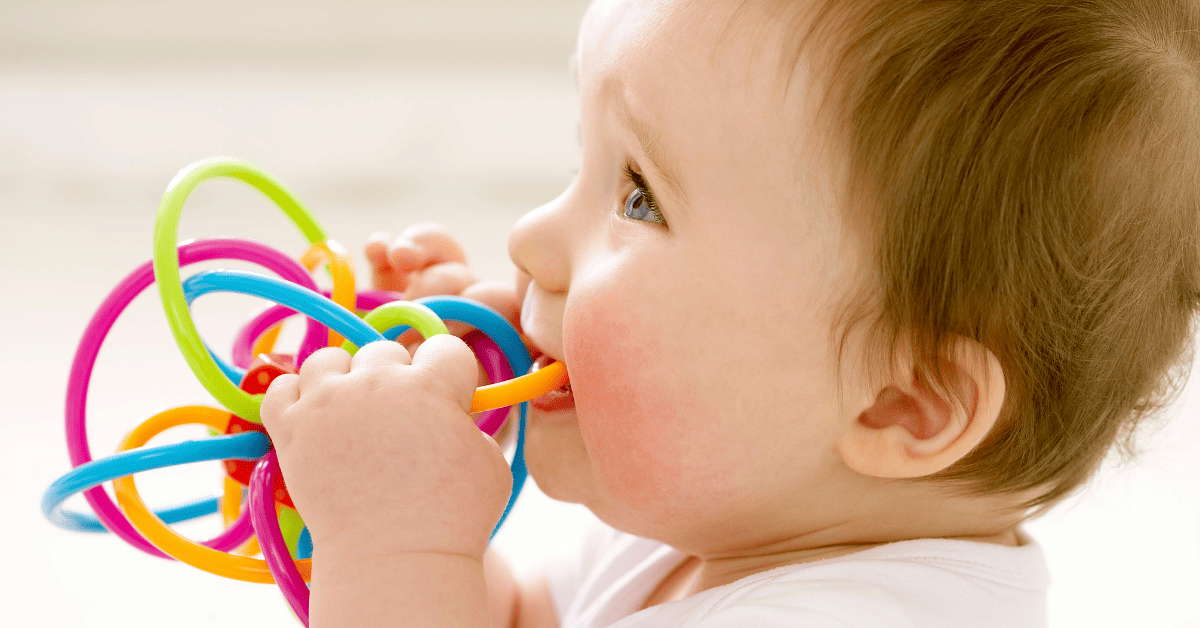
Your baby's favorite toy may suddenly become their favorite thing to chew. When gums feel tender, babies often want to bite or chew on safe objects.
It's one reason a teething toy can become a new favorite.
Swollen or Tender Gums
Take a peek inside your baby's mouth. You may notice that their gums look red, swollen, or feel tender in certain areas. You might even spot a small white bump where a tooth is beginning to emerge.
Fussiness
A baby who is usually cheerful may suddenly need a few more cuddles. Sore gums can make some babies more irritable than usual, especially when a tooth is close to breaking through.
Changes in Sleep
Some babies may have trouble settling down or wake more frequently when they're uncomfortable. However, sleep changes can have many causes, so don't assume every restless night is due to teething.
Changes in Feeding
Tender gums may make sucking or eating uncomfortable for some babies. You might notice temporary changes in how much or how often they want to feed.
What Does a Teething Baby's Mouth Look Like?
Before a tooth appears, the gum around it may look slightly swollen or red. As the tooth gets closer to the surface, you may see a small white spot or edge underneath the gum.
Then one morning, you may notice it: a tiny white tooth peeking through. That first tooth can feel like such a small change, but for parents, it's often a memorable milestone.
Read More: Teething Rash in Babies: Causes, Symptoms & Tips for Parents
What Age Do Babies Get Their First Tooth?

Although many babies get their first tooth around 6 months, there isn't one exact age when every baby should start.
Teething symptoms can also appear before the tooth actually breaks through the gum. This means your baby may be drooling and chewing for days or weeks before you see that first little tooth.
If your baby is approaching their first birthday without a tooth, it doesn't necessarily mean something is wrong. If you're concerned about your baby's dental development, talk with their pediatrician or dentist.
Which Baby Teeth Come In First?
Baby teeth generally appear in a fairly predictable order, although the timing can vary.
The lower central incisors, or the two bottom front teeth, are often the first to appear. They're typically followed by the upper front teeth and then the teeth beside them.
As your baby grows, the first molars, canines, and second molars will gradually follow.
By around age 3, most children have their full set of 20 primary teeth.
What Should You Avoid When Your Baby Is Teething?
When your baby wants to chew on everything, safety matters.
Avoid giving your baby anything that could break apart, create a choking hazard, or be too hard for their gums. Be especially cautious with products marketed as quick fixes for teething pain.
If you're unsure whether a teething product is safe, ask your pediatrician or dentist before using it.
When Should You Call the Pediatrician?
Teething can cause some fussiness and discomfort, but it shouldn't explain away every symptom.
Call your pediatrician if your baby has a high or persistent fever, significant vomiting or diarrhea, signs of dehydration, unusual lethargy, difficulty drinking, or symptoms that seem more severe than typical teething discomfort.
You don't need to wait for a serious symptom to ask for help. If something about your baby's behavior doesn't feel right, it's okay to check with their doctor.
When Should Your Baby First See a Dentist?
Your baby's first tooth is also a good reminder to start thinking about dental care.
The American Academy of Pediatric Dentistry recommends that children have their first dental visit by their first birthday or within six months of their first tooth appearing, whichever comes first.
Starting early gives your child's dentist a chance to check their developing teeth and show you how to care for them at home.
Frequently Asked Questions About Baby Teething

Can babies start teething at 3 months?
Yes, some babies may begin showing signs of teething around 3 months, although it's more common for the first tooth to appear around 6 months.
Is it normal for a 1-year-old to have no teeth?
Some babies don't get their first tooth until around their first birthday or later. If you're concerned about your baby's teeth or development, talk with their pediatrician or dentist.
How long does teething pain last?
Discomfort can vary from baby to baby. It may come and go as different teeth move through the gums, rather than lasting continuously.
Conclusion
So, when do babies start teething? For many babies, it begins around 6 months, but there's no single timeline that applies to everyone.
If your baby's suddenly drooling more, chewing on everything, and asking for extra cuddles, that tiny first tooth may be getting ready to make an appearance. Keep an eye on their symptoms, offer plenty of comfort, and remember that this is just one more little milestone in their growing-up journey.
Related Articles:
How Long Does Teething Last? A Quick Guide for Parents
A Parent’s Guide: Can Teething Cause Fever in Babies?
Teething Rash in Babies: Causes, Symptoms & Tips for Parents

Share:
When Do Babies Stop Breastfeeding? An Age Guide